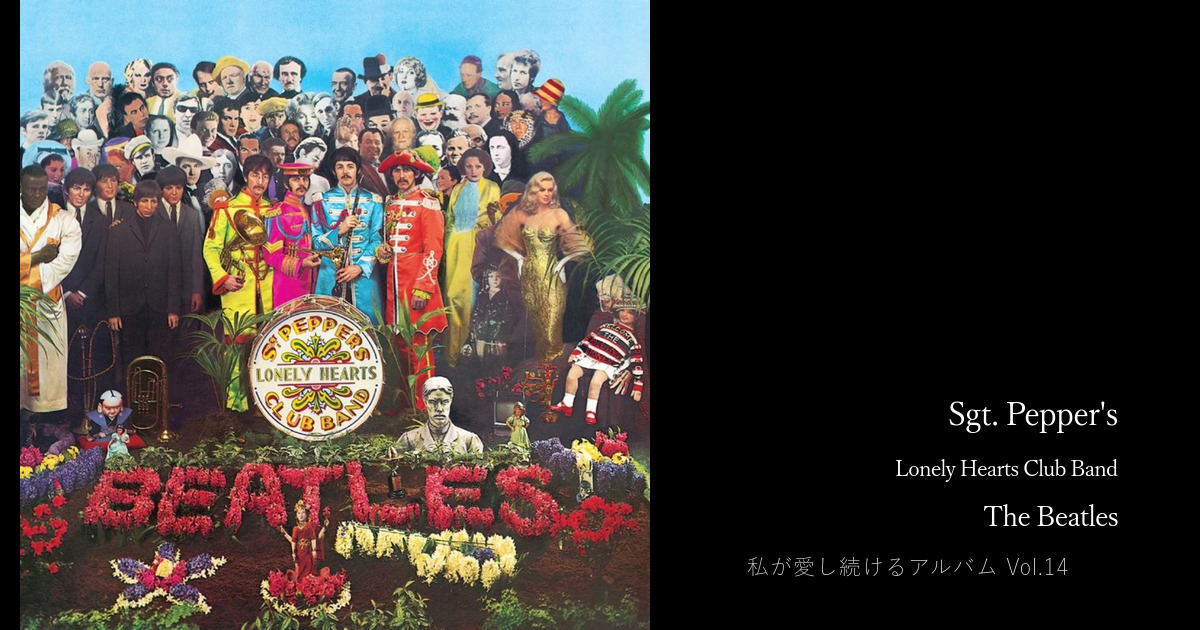
僕が買った 3 枚の Sgt. Pepper's Lonely Hearts Club Band — Masumi Usui
目次
UK 盤 / US 盤 / 日本盤 — ジャケも曲も順番も違っていた時代
初期のビートルズのアルバムは、イギリスで発売されたもの (UK 盤) とアメリカで発売されたもの (US 盤) と日本で発売されたもの (日本盤) では、ジャケットのデザインも曲の内容も順番も違っていた。これがそもそも、ここ数年の僕のビートルズを巡るレコードに対する混乱を巻き起こしている。
ビートルズは当時、イギリスでのスタジオ録音オリジナルアルバムとしてはマジカル・ミステリー・ツアーを入れると 13 枚なのだが、世界中にいろんな種類のオリジナルアルバムが存在している。
しかし「サージェント・ペパーズ・ロンリー・ハーツ・クラブ・バンド」がコンセプトアルバムというビートルズの「架空のバンドショー」という設定で、曲間をなくすなどの手法を取り入れ、アルバムという形式を「芸術作品」の域に高めたことで、世界統一基準としてジャケットデザインも曲の内容も順番も変わることなく世に出回ったと言われている。
実は 1960 年代において、国ごとにアルバムのジャケットや曲の内容や順番が違うのはビートルズだけでなく、ローリング・ストーンズや他のバンドでも普通に起こっていた。レコード会社のマーケティング的な想いが、今でいうプレイリスト的なアルバムとして国ごとで発売されていたのだと思う。
ある意味、このアルバムが 本来あるべきアルバムとしての存在感を明確にした金字塔 として伝説化している由縁だ。
15 歳の僕が買ったピクチャーレコード
時代背景の説明はこれぐらいにして、僕が初めて購入したビートルズのレコードは、1978 年に発売された「サージェント・ペパーズ・ロンリー・ハーツ・クラブ・バンド」のピクチャーレコードだったと思う。
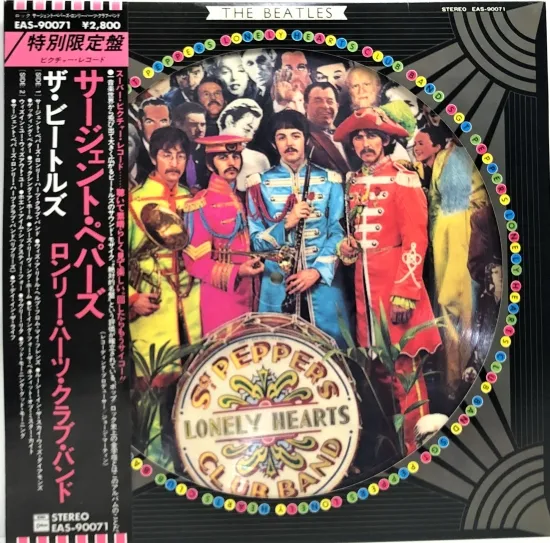
そのレコードは実家にあるはずなのだが、今のところ見つけられていない。昔買ったレコードあるあるである。
なんでその当時 15 歳の少年の僕が、音が良くないピクチャーレコードなんて買ったのか? 今思えば不思議に思うのだが、AI のジェミニに聞いてみると、当時世界的なピクチャーレコードのブームがあったそうだ。ミーハーな僕は多分そのブームに乗って、そのレコードを買ったのだろう。
それはダイカット・ジャケット (中央が円形にくり抜かれたジャケット) に入っており、中のピクチャーレコードが見える仕様だった。そんな出立ちが珍しかったと思う。思えば当時「Let It Be」のアルバムは BOX タイプを買った記憶がある。そのアルバムもどこに行ったのか不明である。多分当時、そんな企画めいたレコードが好きだったと推測できる。
数年前から、なぜかまた欲しくなった
そして数年前から、なぜかビートルズのレコードがまた欲しくなった。
ビートルズは最近の曲「ナウ・アンド・ゼン」まで合わせて 216 曲、オリジナルのスタジオアルバムとしては 13 枚リリースとしている。そして僕は現在ざっと数えて 38 枚のビートルズのアルバム をここ数年で買った。ちゃんと数えていないのでもう数枚あるかもしれない。
なぜこんな事になったのであろうか? しかも僕は Apple Music とサブスク契約しているので、ビートルズの曲はいつでもどこでも聴き放題であるのにもかかわらずである。完全にレコード病に感染している。その処方箋は中古レコード店に通うことしかない。特にビートルズのレコードは沼が深い。
数年前にビートルズの著書やドキュメンタリー映画の翻訳で有名な藤本邦彦さんとお話しした際に、ローリング・ストーンズとビートルズを比べるとビートルズのレコードは音が良いと教えてくれた。確かに、特に初期のものはストーンズのレコードは全体的に音がこもっており、ベースの音も聞こえにくい。それに比べビートルズのレコードの音はクリアで、それぞれのパートの音が分離しており、ベースの音も温かい輪郭があり落ち着く。そんなこんなで、僕はビートルズのレコードのサウンドにハマっていった。
US 盤と「KP」の刻印 — ケン・ペリーの音
サージェント・ペパーズ・ロンリー・ハーツ・クラブ・バンドのレコードの話に戻そう。
僕は昔ベーシストをしていたので、低音の音が豊かなサウンドが好きだ。US 盤は低音の音がいいと言われているので、中古レコード店で US 盤を見つけて購入した。
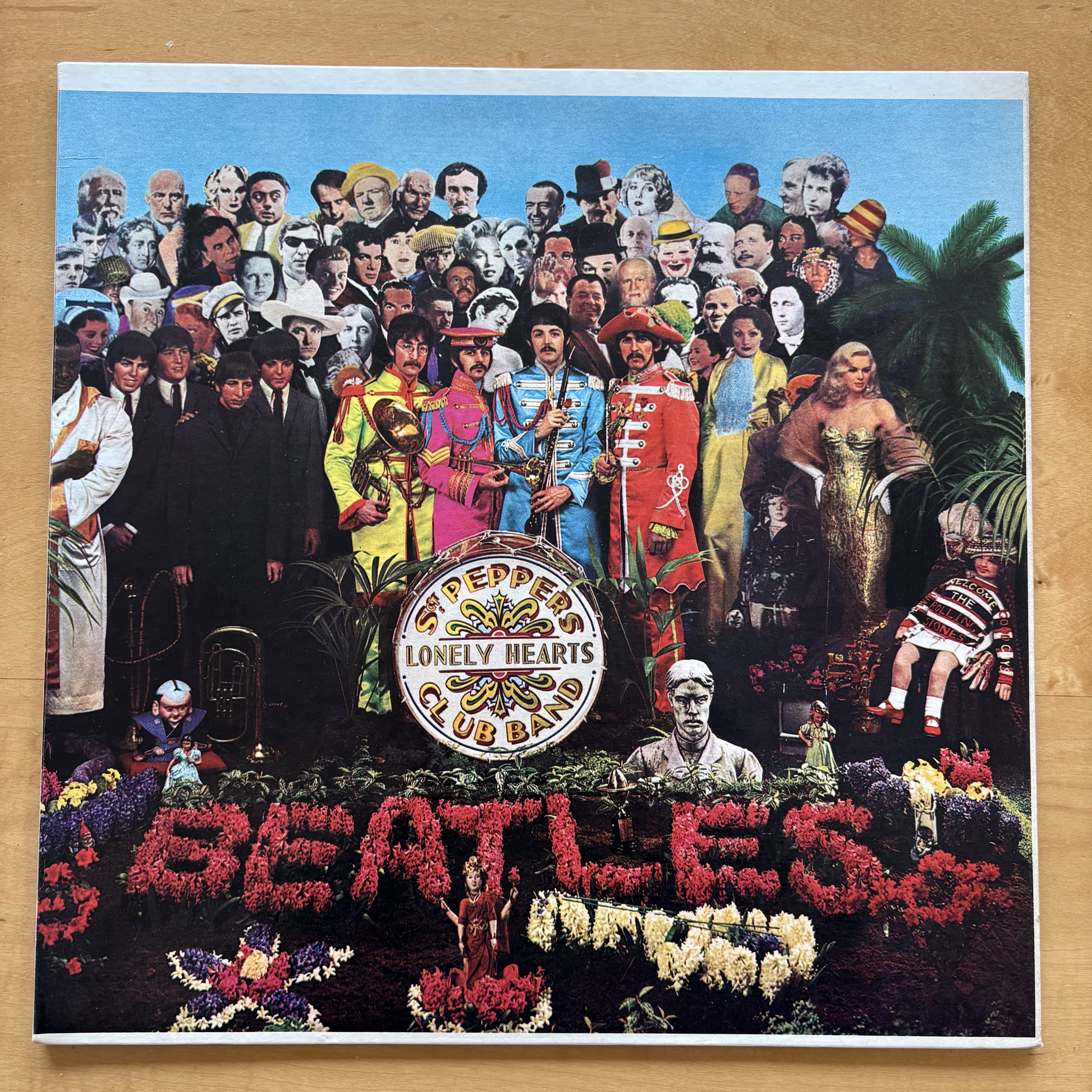
そしてこのレコード盤がくせものだった。
レコード盤にはマトリックスナンバーと言って、レーベルの近くに製造した時期や工場がわかる記号がつけてある。ビートルズのレコードは世界中のファンにより研究がされており、その記号からそれが詳しく判明できるのだ。調べてみたところ、僕が買った US 盤は 1970 年代前半にバージニア州にあるウィンチェスター工場でプレスされたものだった。とてもタフなサウンドがするレコードである。
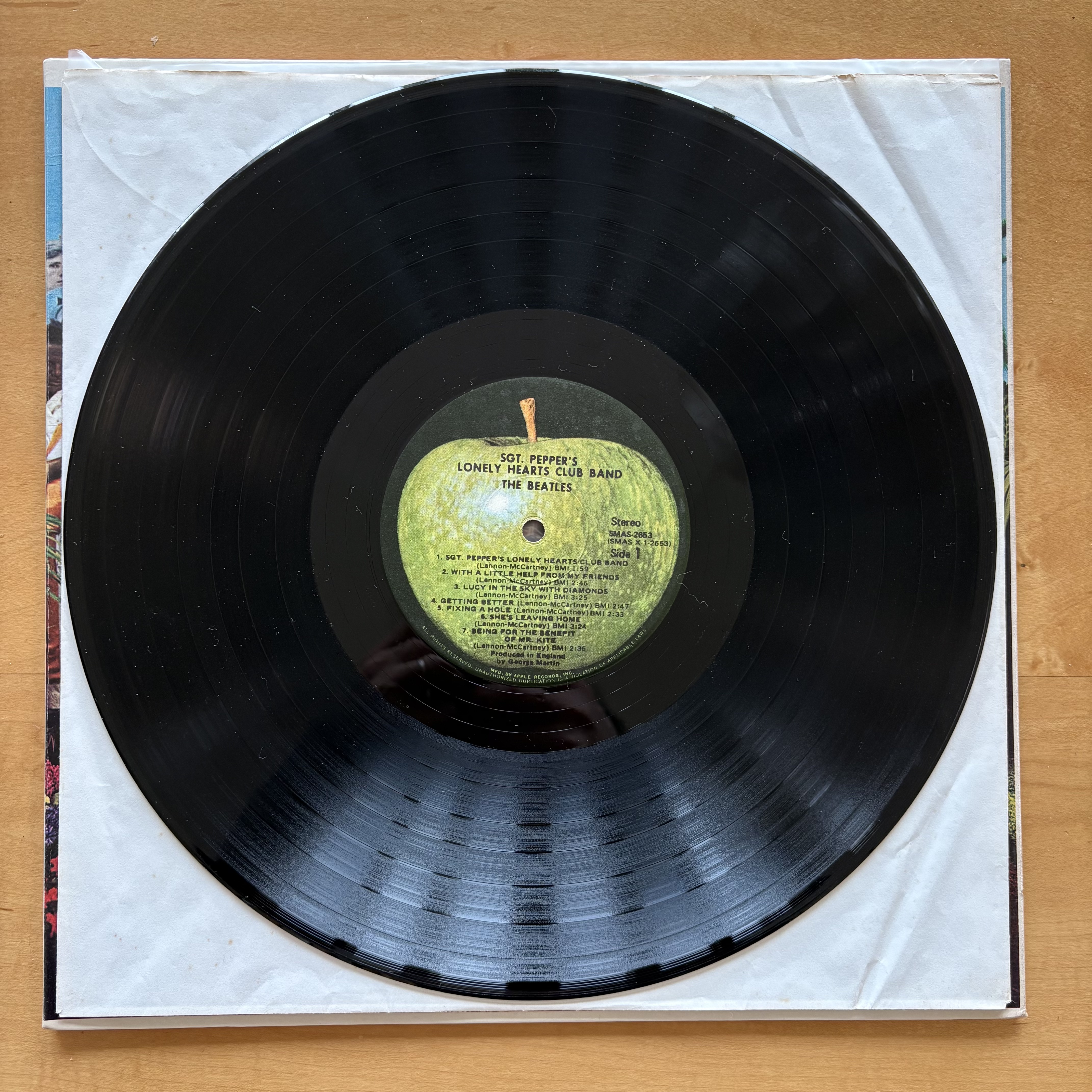
しかもよく見ると「KP」という手書きのイニシャルが彫ってあった。それは名エンジニアであるケン・ペリー氏がこのレコードのカッティングを担当したという刻印である。
レコードは、マスターテープの音をそのまま盤に刻むわけではなく、カッティングエンジニアがその場の判断でイコライジングなどの微調整を行いながら溝を刻むそうだ。どうも取り組んだエンジニアごとにサウンドが違うらしい。 このケン・ペリー氏のカッティングは、中低域に厚みがあり、非常にパワフルで鳴りの良い音が特徴と言われている。
そんな情報を調べてもう一度レコードを聴いてみると、ロンドンのアビーロード・スタジオで録音された音から、アメリカの 70 年代の香りが感じられてくるから不思議である。
日本盤モノラル赤盤 — メンバーが立ち会ったミックス
そしてもう一枚、素敵なサージェント・ペパーズ・ロンリー・ハーツ・クラブ・バンドのレコードに出会ってしまった。それは 1982 年に日本で発売されたリイシュー盤で、限定発売カラー・レコードとして発売された「赤盤」モノラルシリーズ のレコードである。
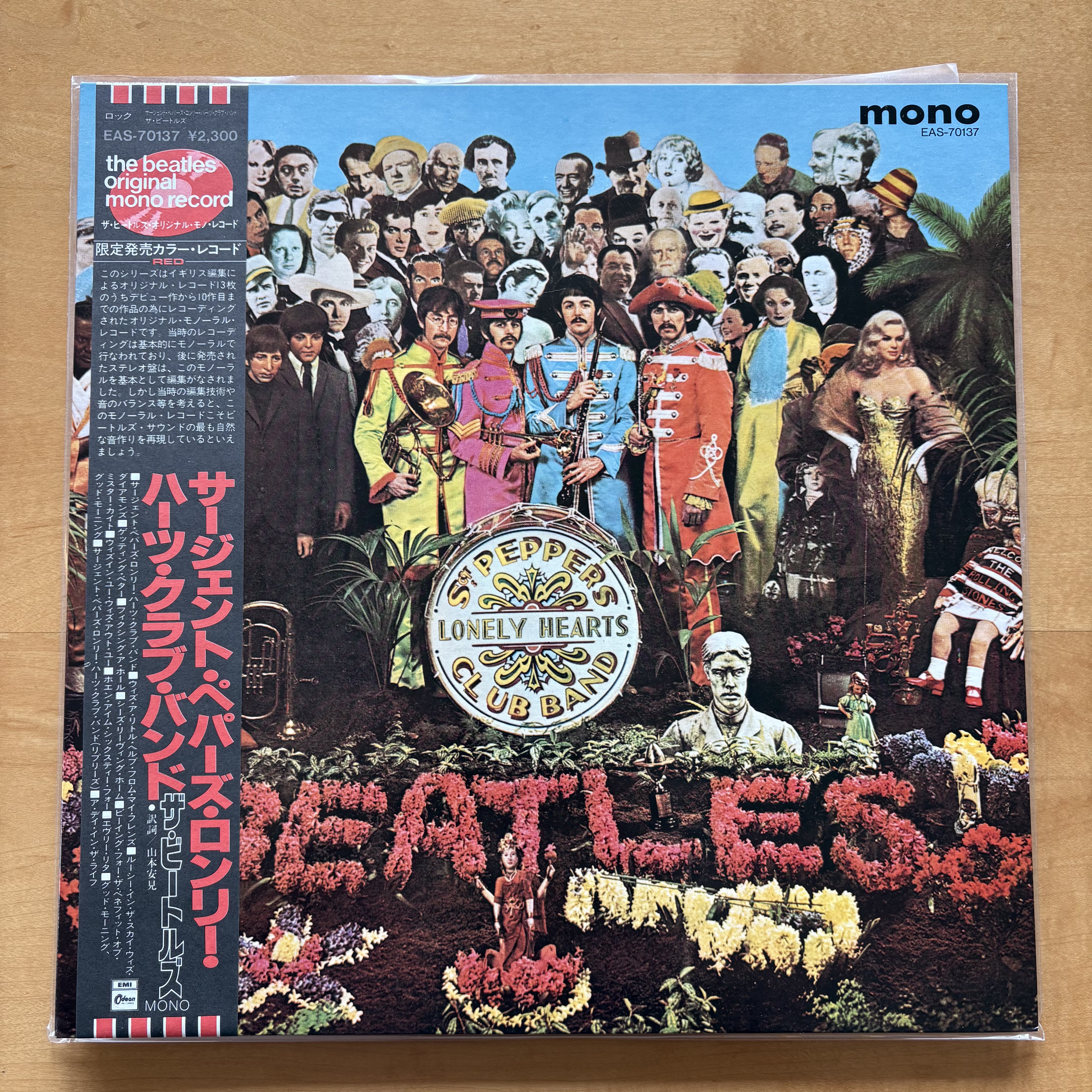
ビートルズのレコードにはステレオとモノラルが存在する。ビートルズ自身がサウンドをチェックしているのはモノラルのタイプと言われている。当時は AM ラジオで楽曲をモノラルで放送されていたそうである。モノラルがミックスの基準だったらしい。
そう言われるとモノラルのレコードが気になってくる。今もミーハーな僕は、モノラルのビートルズのレコードを集め始めた。しかしサージェント・ペパーズ・ロンリー・ハーツ・クラブ・バンドのモノラルレコードは珍しいらしく、オリジナル盤は特に見つけられないので諦めてはいた。しかし手に届くレコード盤に出会ったので、モノラル盤を購入した。
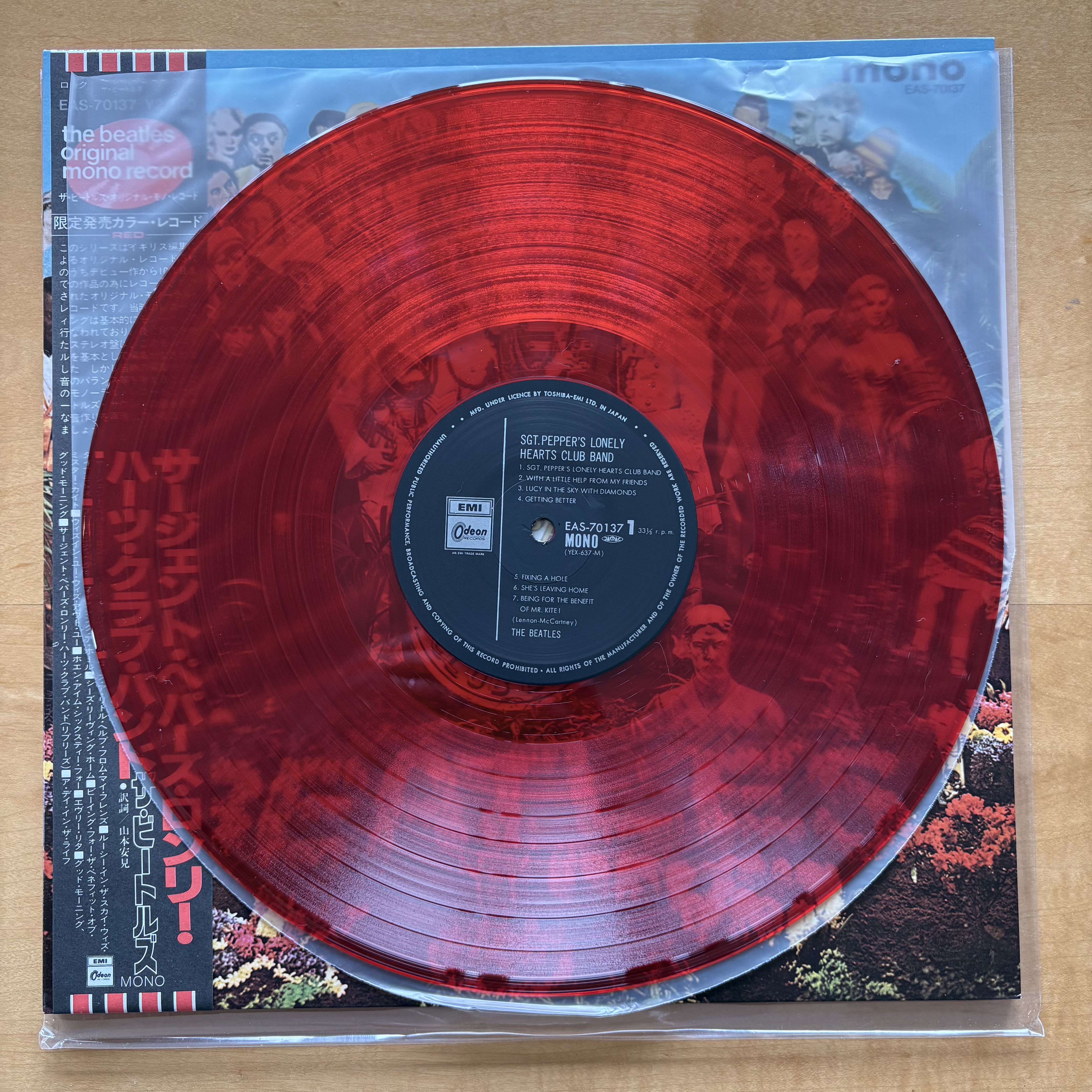
そしてビートルズのメンバーが熱心にミックス作業に立ち会っているモノラルミックスのサウンドのレコードを、僕は堪能している。
全体を通じて聴く、唯一無二のアルバム
全然アルバムの曲の話になっていないけど、いいんです。
実は僕は 10 代の頃から、お家でアルバムを最初から最後まで真面目に聴くタイプではないんです。もちろんアルバムを最初から最後まで聴くこともたくさんあります。でもその時の気分や流れで、DJ の如く曲をセレクトしてミックスしながらターンテーブルで PLAY する ことも多い気がします。
そう思った時に、サージェント・ペパーズのアルバムは いつも最初から最後まで順番で聴いていて、しかも途中の曲だけセレクトして PLAY する事はなかった。全体を通じて世界観を堪能できる唯一無二とも言えるアルバムだと思います。改めて最初から最後まで聴いていただきたいアルバムです。きっと新しい発見があると思います。
そんなこんなで、僕はその日の気分に応じて、その 2 枚の同じタイトルのアルバムを楽しんでいる。そしてたまに中古レコード店でサージェント・ペパーズ・ロンリー・ハーツ・クラブ・バンドのピクチャーレコードを見かけると、15 歳の頃を思い出す。
編集後記
碓井眞澄さん、愛称「ベルーシ」は、その昔、僕(ナミオ)が松山でブルースバンドをやっていた頃の仲間。Blues Brothers のジョン・ベルーシに似ていたから、勝手にそう呼ばせてもらった。今は広島で広告業界の第一線で活躍しているけれど、顔を合わすとただのバンド仲間。いいベースを弾く。
無理難題を投げても、いつも楽しそうに応えてくれる。今回も「コラム書いて」とお願いしたら、3 枚の Sgt. Pepper's の話 を、レコード番号、マトリックスナンバー、カッティングエンジニアの名前まで添えて送ってくれた。広告業界の人の文章だと思って読み始めたら、ベース弾きの耳 が混じっていた。「KP の刻印」「中低域に厚みがある」「ベースの音も温かい輪郭があり落ち着く」— こういう一行は、低音をちゃんと聴いてきた人にしか書けない。
サージェント・ペパーズ・ロンリー・ハーツ・クラブ・バンドの発売は 1967 年 6 月 1 日。それから 60 年近く経つのに、ベルが買い集めた 3 枚のレコードは、同じタイトルなのに、それぞれ違う音で鳴っている。日本盤ピクチャー、US apple 盤、日本盤モノラル赤盤 — 同じ曲が、3 つの時代と 3 つの場所の空気を運んでくる。
そして「全然アルバムの曲の話になっていないけど、いいんです」— このベルらしい開き直りが、いい。レコードに沼っている人の正直な手記 だ。「全体を通じて世界観を堪能できる唯一無二のアルバム」という結論にちゃんと帰ってくるところも、ベル流。
ベルに、感謝。Sgt. Pepper's Lonely Hearts Club Band をぜひ、最初から最後まで通しで聴いてほしい。できればレコードで。

書き手

The Beatles
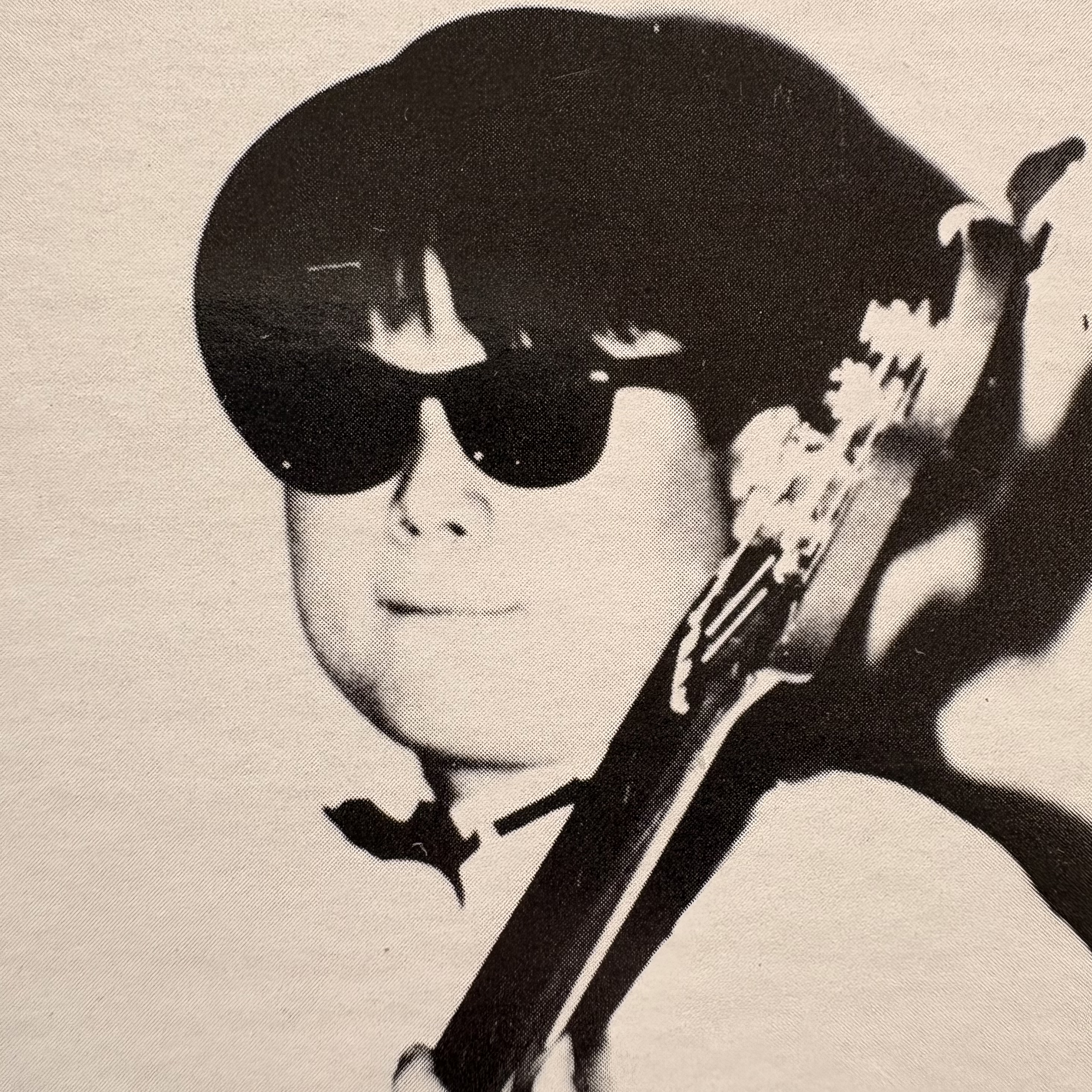
ビートルズ(The Beatles)は、1960年から1970年にかけて活動したイギリス・リヴァプール出身のロックバンドである。「ファブ・フォー(Fab Four / Fab4)」 と…
アーティストページを見る同アーティストの他のアルバム


Album Sweet コラム
71才の人生で一番好きだったアーティストは、やっぱりジミヘン - Kenji Fukuoka
どんなバンドでも代替がきくのに、Steely Dan だけは唯一無二 - Mikiya Kato
私が愛し続けるアルバム — 『新・鈴懸の径』鈴木章治&リズムエース - Hidetoshi Takada
練馬の夜、酒とスティング — Masayuki Hamaoka
ブーツィの「ンペッ、ンペッ」に踊り狂った日 — Katsuhiko Sakaguchi
洋楽への扉を開いてくれたアルバム — Masato Ikegawa
アルバムジャケットは人生の圧縮ファイル — Mitsuhiro Nakano
一生、マイケルエンザでいい — Waka Agata
Lou Reed『Live In Italy』〜変わらぬ「無人島の1枚」 — Tetsuya Takeda
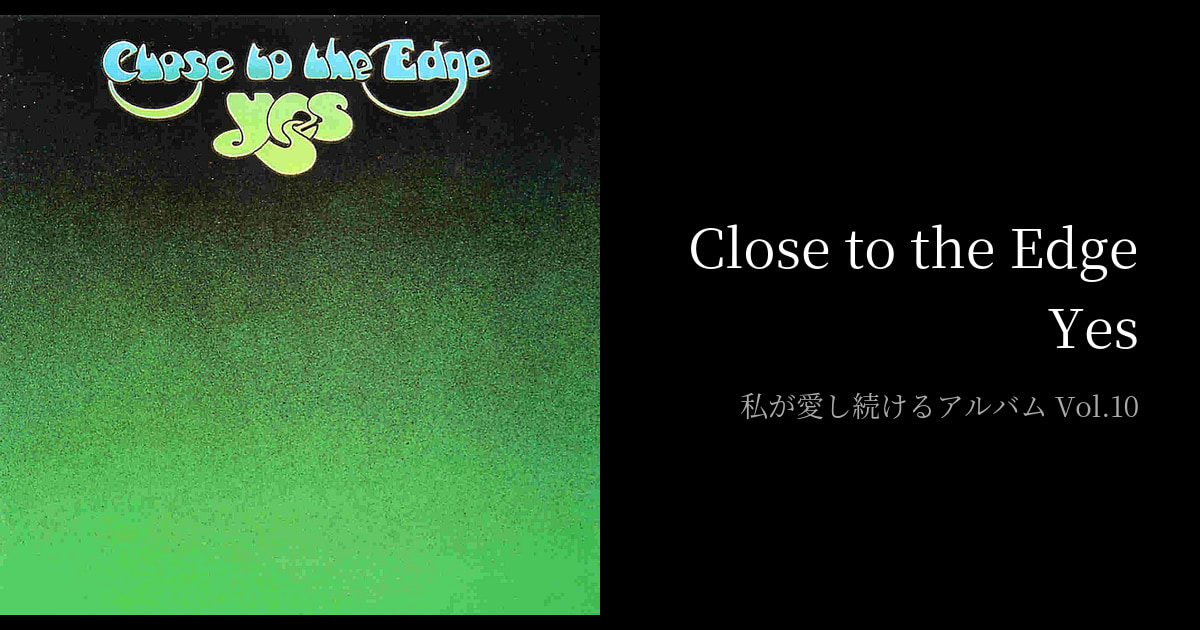
Yes『Close to the Edge』〜天井のロジャー・ディーンと畳二畳の夜 — Bobby (得能さとる)
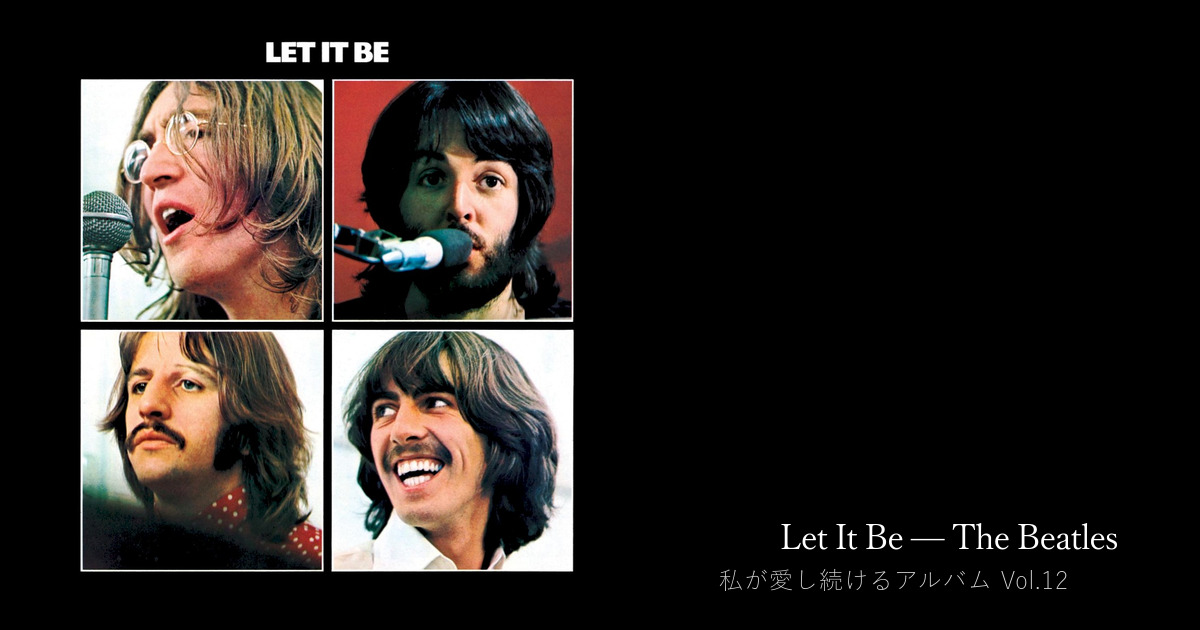
アビーロードの 3 日後に生まれた僕と、Let It Be — Masayuki Hamaoka
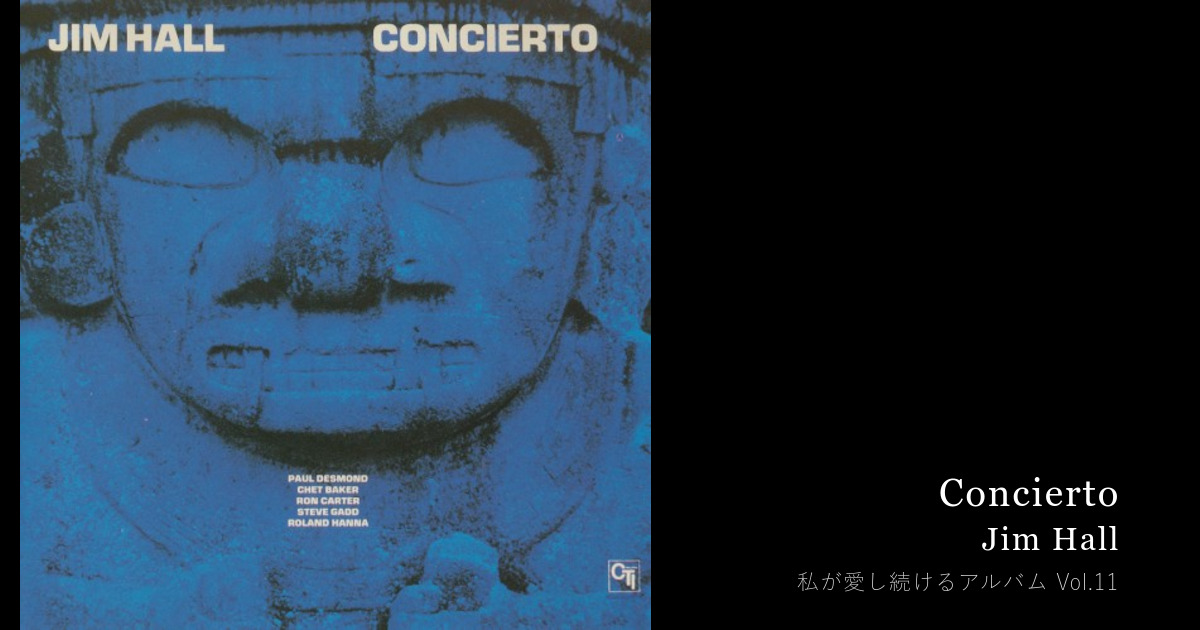
「松山のギターマスターが、70 年聴き続けている一枚」 — Fumio Takeichi
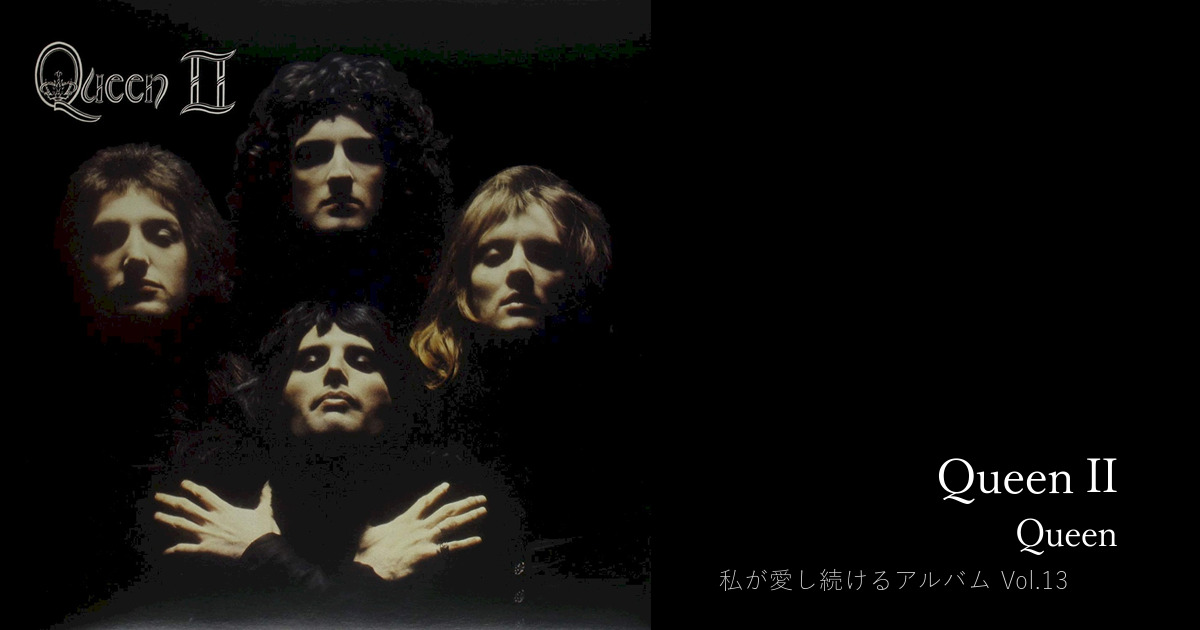
ヤバい世界に 50 年、Queen II — Yoko Sugihara
読んでいます僕が買った 3 枚の Sgt. Pepper's Lonely Hearts Club Band — Masumi Usui
14歳の私に大人っぽさを教えてくれたbird『bird』 — Koutaro Kai
ジンとくる。ジワッとくる。——Bob Marley & The Wailers との出会い — Kazuo Nara
少年期に焼きついた、特別の一枚 — Captain Beyond《Captain Beyond》 — Kouji Shigematsu
兄のレコードに針を落とした夜、初めて知った『大人の音楽』 — Hotel California — Hiroshi Kozai
珠玉のポップ・ヴォーカルをあなたにも — Nice Feelin’《Rita Coolidge》 — Makoto Kato

段ボール数箱の整理で、手放さなかった一枚 — Without a Net《Grateful Dead》 — Takuya Miyazaki

思い出のLPレコード — Help!《The Beatles》 — Kazuhiro Miura
ぼちぼちいこか。でも At Fillmore East だけは、今も特別や — Yoshihiro Sasaki
1981年8月の武道館は、今もあのアルバムの中にある — One Night at Budokan《Michael Schenker Group》 — Shinichi Karube